
Kratom: What It Is, Why It Becomes a Problem, and How to Get Help
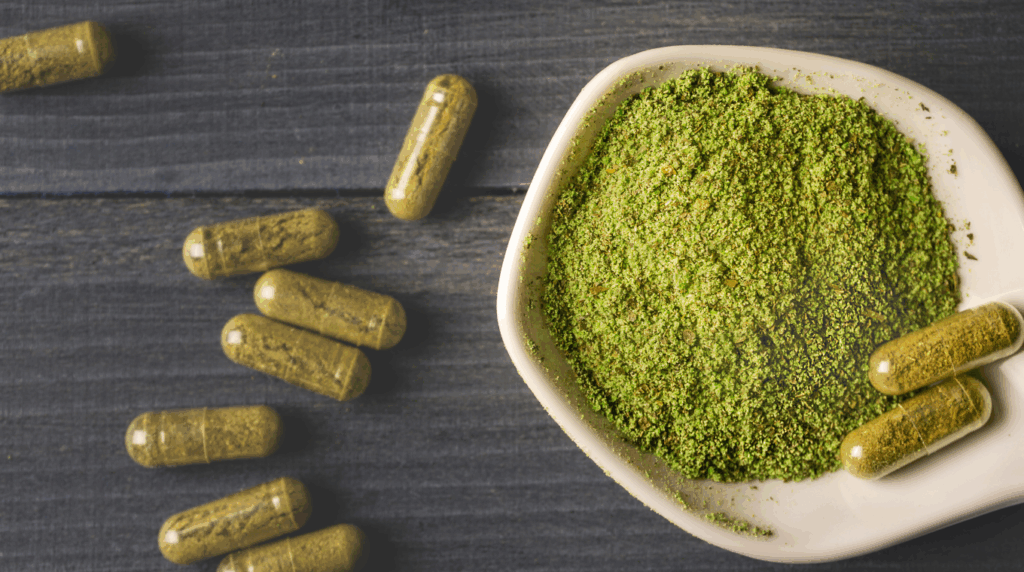
Kratom is often sold in gas stations, vape shops, and online as a “natural” supplement for energy, pain relief, or relaxation. Because it comes from a plant — the Mitragyna speciosa tree found in Southeast Asia — many people assume it’s safe. But “natural” does not mean harmless. Kratom acts on some of the same brain receptors as opioids, and for thousands of people across the United States, it has become a substance that slowly takes over their life.
The National Institute on Drug Abuse (NIDA) notes that kratom’s main active compounds, mitragynine and 7-hydroxymitragynine, bind to opioid receptors in the brain — the same receptors that regulate pain, reward, and physical dependence. This is why people may feel stimulated at low doses and sedated at higher ones, and why stopping kratom can cause withdrawal similar to opioid withdrawal.
Whether you’re using kratom yourself, or you’re a parent, partner, or friend worried about someone you care about, understanding what kratom does — and how recovery works — can make all the difference.
What Kratom Actually Does in the Body
Kratom’s effects depend on the dose and the strength of the product. Unfortunately, there is no regulation of kratom in the U.S., so products vary dramatically — some are mild, while others contain high concentrations or additives that increase risk.
People commonly report:
At low doses:
· More energy
· Increased alertness
· Talkativeness or sociability
At higher doses:
· Sedation or a “calm, heavy” feeling
· Pain relief
· Slowed thinking or reaction time
Side effects can include nausea, constipation, sweating, tremors, itching, dizziness, or rapid heartbeat. More concerning problems — such as seizures, liver injury, or dangerous interactions with other medications — have been reported as well (FDA consumer updates have repeatedly raised these concerns).
But the most significant issue is that repeated use can lead to dependence.
How Kratom Becomes Addictive
Most people don’t intend to become dependent on kratom. They may start using it to cope with stress, chronic pain, or anxiety — or to get through work or long shifts. But kratom changes the brain in ways that can quietly build dependence over time.
Here’s why:
1. It activates the brain’s opioid system.
Kratom’s alkaloids attach to the same receptors that opioids do. With repeated use, the brain begins to rely on the substance to feel normal.
2. Tolerance develops.
Someone may need larger amounts to achieve the same effect they once got from a small dose.
3. Withdrawal appears when trying to stop.
Because the brain has adapted, stopping suddenly can bring withdrawal symptoms that feel overwhelming.
4. Daily functioning starts to revolve around use.
A person may find themselves thinking about it constantly, planning their day around use, or hiding their use from others.
None of this means someone is “weak” or “making poor choices.” It means the substance changed their neurobiology — something that can happen to anyone.
How to Recognize When Someone Is Struggling
If you’re worried about yourself or someone you love, here are some common signs that kratom use may be crossing into dependence:
· Needing more kratom to get the same effect
· Feeling anxious, irritable, or physically sick when not using
· Unsuccessful attempts to cut down or quit
· Buying multiple products or searching for stronger versions
· Using kratom to cope with stress, sadness, or physical pain
· Avoiding friends or family or hiding use
· Trouble concentrating, working, or sleeping
· Feeling unable to get through the day without using
Withdrawal may include muscle aches, restlessness, runny nose, trouble sleeping, mood swings, anxiety, stomach upset, and strong cravings. These symptoms can start within hours of stopping and may last several days to a week.
If any of this sounds familiar, it’s a sign that help may be needed — not judgment, not shame, but real support.
Why Seeking Treatment Matters
It is absolutely possible to recover from kratom dependence. But trying to do it alone is often overwhelming for two reasons:
1. Withdrawal can be highly uncomfortable.
Many people return to use simply to make the symptoms stop.
2. Kratom is tied to deeper challenges.
Pain, stress, trauma, burnout, depression, anxiety, or isolation may have led to use in the first place. Without addressing these root issues, the cycle tends to continue.
Professional treatment provides structure, medical care, emotional support, and a plan — all of which make recovery far more successful.
What Recovery Looks Like at Fellowship Hall
Fellowship Hall has more than 50 years of experience helping people heal from substance use disorders, including emerging substances like kratom. Our approach is grounded in compassion, evidence, and the belief that people can — and do — recover.
Here’s how we support individuals seeking help for kratom dependence:
1. Medical Assessment and Stabilization
Because kratom interacts with opioid receptors, withdrawal should be monitored by medical professionals. Our medical team evaluates:
· Current kratom use
· Other substances or medications
· Mental health concerns
· Physical health risks (such as liver function or dehydration)
When needed, we provide medically supervised detox to keep guests safe and as comfortable as possible.
2. Individualized Counseling and Therapy
Kratom dependence rarely happens in isolation. Treatment at Fellowship Hall includes:
· One-on-one therapy
· Trauma-informed approaches
· Mental health evaluation and treatment
· Learning healthier ways to manage pain, stress, or anxiety
Our Licensed Clinical Addiction Specialists and counselors help each guest understand why they leaned on kratom — and how to build a life that no longer needs it.
3. Group Support and Connection
Community is one of the strongest predictors of long-term recovery. Our group programs help guests:
· Hear from others who understand their struggle
· Build communication and coping skills
· Strengthen motivation and self-awareness
· Develop accountability and support systems
For many, these connections are the turning point.
4. Family Education and Support
Kratom use affects more than the person using it. Families often feel confused, frustrated, or helpless. We offer education, guidance, and structured family programming so loved ones can:
· Understand what kratom dependence is (and isn’t)
· Learn how to support recovery without enabling
· Begin healing relationship dynamics impacted by substance use
5. Aftercare and Long-Term Recovery Planning
Recovery doesn’t stop when treatment ends. Fellowship Hall provides:
· Relapse-prevention planning
· Intensive Outpatient Programs (IOP)
· Partial hospitalization programming (PHP)
· Continuing care groups
· Alumni events and community support
Our goal is long-term stability — not a quick fix.
When to Reach Out for Help
If kratom has become something you rely on rather than something you choose, or if you’re watching someone you love slip deeper into use, reaching out for help is a sign of strength — never failure.
People seek treatment when they:
· Feel stuck
· Are scared of withdrawal
· Notice their use getting out of control
· Want to be fully present for their family
· Are exhausted from trying to quit alone
· Know they deserve better than the life kratom is giving them
Hope begins the moment you ask for help.
Fellowship Hall Is Here for You
Kratom dependence is real, and it’s treatable. You do not have to figure this out by yourself. Whether you need medical support to detox, a structured therapeutic environment, or ongoing outpatient care, Fellowship Hall offers a safe, compassionate place to recover.
If you’re ready to take the next step — or even if you’re simply unsure and want to talk through your options — we’re here.
You deserve a life not controlled by a substance. And recovery, no matter how far away it feels, is absolutely possible.
"*" indicates required fields
CONNECT WITH US
Our Admissions Staff Is Here to Help
Not sure if you or someone you love needs help? Call our Admissions Staff who can help you assess the next step at 336-553-6596."*" indicates required fields